
Why teams choose Sigma vs ThoughtSpot
Semantic Portability
Protect existing investments. Sigma natively integrates with dbt, Snowflake Semantic Views, and Databricks Unity Catalog metric views, allowing externally built metrics to flow directly into Sigma without re-definition.
Sigma Agents
Turn insights into automated work. Sigma Agents read, write, and trigger external workflows while inheriting warehouse security, ensuring every action is fully auditable.
AI Applications
Move beyond read-only dashboards. Empower all users to build interactive AI Apps so that they can take action and safely write decisions directly back to your cloud data warehouse.
Secure Governance
AI security must be architectural. Sigma Agents and AI Apps automatically inherit your cloud data warehouse Row-Level Security (RLS) and Column-Level Security (CLS).
Enterprise SDLC
Get production-grade controls without the engineering overhead. Sigma isolates draft and live states using connection-aware deployment and version tagging.
AI Ecosystem
Sigma is your OS for live data and AI. Securely unify external agents via MCP with warehouse LLMs and Sigma Agents for natural language discovery and action without vendor lock-in.
AI, Apps, and Agents with all the BI that you expect.
We excel in the cloud
Analyze billions of rows of live warehouse data using spreadsheet formulas you already know. No stale extracts, row limits, or proprietary coding languages. Ask Sigma Assistant if you have a question.
Dashboards built the way you’ve always wanted
Use Sigma Assistant to help you build dynamic, interactive dashboards without writing SQL or waiting on data engineering. Drill down to the underlying row level instantly on live, governed data.
Write directly back to your warehouse
If you know how to use a spreadsheet, you can safely capture data, run live scenarios, and trigger downstream workflows. Deploy Sigma Agents to fully automate those actions with a complete audit trail.
Scale with unmatched performance
Securely embed live analytics and writeback capabilities into your customer portals. Automatically inherit warehouse security for strict multi-tenant data isolation without duplicate permission models.
Sigma is the enterprise leader in self-service analytics and operational workflows.
FEATURE COMPARISON
As of March 29, 2026
Sigma
Thoughtspot
Multi-Modal Development
Unifies technical and non-technical users by enabling them to collaborate across spreadsheets, SQL, Python, and AI in one workspace. No context-switching, no duplicate data, and no broken governance.
Forces developers into separate Notebook silos for SQL and Python, disconnecting technical data teams from end users and impeding enterprise collaboration across functions.
Spreadsheet Interface
Familiar spreadsheet UI for accessible analysis and no-code AI App building without added licenses or waiting on IT.
Confines spreadsheet functionality to technical Analyst Studio and restricts users to a rigid search paradigm. Complex operational analysis requires technical intervention or data extraction, bottlenecking self-service.
AI Applications
Move beyond read-only dashboards with AI Apps and Sigma Agents. All users can build and deploy no-code interactive applications with embedded autonomous agents that answer questions, securely trigger external workflows, and natively write governed decisions to your warehouse.
ThoughtSpot cannot support interactive applications or autonomous agents without heavy external engineering. This traps users in an answer-only dead end, structurally incapable of automating workflows or closing the insight-to-action loop natively.
AI Model Flexibility
LLM-agnostic architecture lets you directly connect to OpenAI, Azure OpenAI, or Google Gemini and use any Snowflake Cortex or Databricks hosted LLM including Claude from Anthropic. Future-proof your infrastructure and easily switch models using familar spreadsheet functions to optimize for cost and performance without needing code to rebuild your workflows.
Restricts AI model selection to system-wide, admin-level configurations behind a proprietary interface. Lacks the multi-modal agility for allowing all users to dynamically swap or interact with different LLMs directly within their workflows. This replicates legacy IT bottlenecks, forcing dependence on rigid, predefined AI implementations.
Governed Collaboration
Sigma's architecture enables synchronous, multi-user state management and agentic collaboration. Multiple users can build, edit, and explore the same live workbook simultaneously without locking files or overwriting work. This shared environment natively supports human-in-the-loop approval chains, allowing teams to securely review and approve Sigma Agent actions before execution.
Architected on serialized, single-user sessions that fundamentally cannot support multi-user collaboration. Users are restricted to asynchronous comments because concurrent editing risks overwritten work. This rigid architectural bottleneck makes the development of interactive AI applications and synchronous agentic workflows structurally impossible.
Semantic Layer Integration
Natively integrate with dbt, Snowflake Semantic Views, and Databricks Unity Catalog metric views so centrally defined metrics flow directly into AI Apps and Sigma Agents without re-definition. This shared semantic foundation ensures automated actions execute with governed precision and complete auditability.
Relies on proprietary modeled Worksheets and forces translation and re-definition of third-party semantic layers. The persisting mandate on data teams to duplicate logic traps them in wasteful, inefficient maintenance cycles.
Writeback
Capture inputs and trigger workflows safely via Input Tables. Every user writeback and Sigma Agent action automatically inherits your cloud data warehouse’s native permissions and security policies, ensuring absolute enterprise governance.
Lacks direct warehouse writeback. Updating source records and bidirectional modeling is natively impossible in ThoughtSpot so users must egress sensitive data to external SaaS apps to take action. This movement severs data lineage and breaks inherited warehouse governance, creating security and compliance risk.
Unstructured Data Querying
Natively extract insights from PDFs, images, and unstructured text using AI functions in Sigma's spreadsheet interface. All users can query, join, and analyze unstructured documents directly alongside tabular data in a single, governed platform.
Analyzing contracts, images, or unstructured text requires extensive pre-processing and complex data engineering pipelines, isolating valuable unstructured insights from your core business reporting.
Materialization Controls
End-users can define scheduled or on-demand materialization to optimize cost and performance.
Relies primarily on warehouse performance and requires separate API/Admin configuration for caching. No in-tool materialization control.
Lineage
Visual lineage traces data origin and transformations at data-element level.
Basic lineage via governed data models; lacks element-level detail.
Sigma
Thoughtspot
Multi-Modal Development
Unifies technical and non-technical users by enabling them to collaborate across spreadsheets, SQL, Python, and AI in one workspace. No context-switching, no duplicate data, and no broken governance.
Forces developers into separate Notebook silos for SQL and Python, disconnecting technical data teams from end users and impeding enterprise collaboration across functions.
Spreadsheet Interface
Familiar spreadsheet UI for accessible analysis and no-code AI App building without added licenses or waiting on IT.
Confines spreadsheet functionality to technical Analyst Studio and restricts users to a rigid search paradigm. Complex operational analysis requires technical intervention or data extraction, bottlenecking self-service.
AI Applications
Move beyond read-only dashboards with AI Apps and Sigma Agents. All users can build and deploy no-code interactive applications with embedded autonomous agents that answer questions, securely trigger external workflows, and natively write governed decisions to your warehouse.
ThoughtSpot cannot support interactive applications or autonomous agents without heavy external engineering. This traps users in an answer-only dead end, structurally incapable of automating workflows or closing the insight-to-action loop natively.
AI Model Flexibility
LLM-agnostic architecture lets you directly connect to OpenAI, Azure OpenAI, or Google Gemini and use any Snowflake Cortex or Databricks hosted LLM including Claude from Anthropic. Future-proof your infrastructure and easily switch models using familar spreadsheet functions to optimize for cost and performance without needing code to rebuild your workflows.
Restricts AI model selection to system-wide, admin-level configurations behind a proprietary interface. Lacks the multi-modal agility for allowing all users to dynamically swap or interact with different LLMs directly within their workflows. This replicates legacy IT bottlenecks, forcing dependence on rigid, predefined AI implementations.
Governed Collaboration
Sigma's architecture enables synchronous, multi-user state management and agentic collaboration. Multiple users can build, edit, and explore the same live workbook simultaneously without locking files or overwriting work. This shared environment natively supports human-in-the-loop approval chains, allowing teams to securely review and approve Sigma Agent actions before execution.
Architected on serialized, single-user sessions that fundamentally cannot support multi-user collaboration. Users are restricted to asynchronous comments because concurrent editing risks overwritten work. This rigid architectural bottleneck makes the development of interactive AI applications and synchronous agentic workflows structurally impossible.
Semantic Layer Integration
Natively integrate with dbt, Snowflake Semantic Views, and Databricks Unity Catalog metric views so centrally defined metrics flow directly into AI Apps and Sigma Agents without re-definition. This shared semantic foundation ensures automated actions execute with governed precision and complete auditability.
Relies on proprietary modeled Worksheets and forces translation and re-definition of third-party semantic layers. The persisting mandate on data teams to duplicate logic traps them in wasteful, inefficient maintenance cycles.
Writeback
Capture inputs and trigger workflows safely via Input Tables. Every user writeback and Sigma Agent action automatically inherits your cloud data warehouse’s native permissions and security policies, ensuring absolute enterprise governance.
Lacks direct warehouse writeback. Updating source records and bidirectional modeling is natively impossible in ThoughtSpot so users must egress sensitive data to external SaaS apps to take action. This movement severs data lineage and breaks inherited warehouse governance, creating security and compliance risk.
Unstructured Data Querying
Natively extract insights from PDFs, images, and unstructured text using AI functions in Sigma's spreadsheet interface. All users can query, join, and analyze unstructured documents directly alongside tabular data in a single, governed platform.
Analyzing contracts, images, or unstructured text requires extensive pre-processing and complex data engineering pipelines, isolating valuable unstructured insights from your core business reporting.
Materialization Controls
End-users can define scheduled or on-demand materialization to optimize cost and performance.
Relies primarily on warehouse performance and requires separate API/Admin configuration for caching. No in-tool materialization control.
Lineage
Visual lineage traces data origin and transformations at data-element level.
Basic lineage via governed data models; lacks element-level detail.
Trusted by 2,000+ leading enterprises around the world

















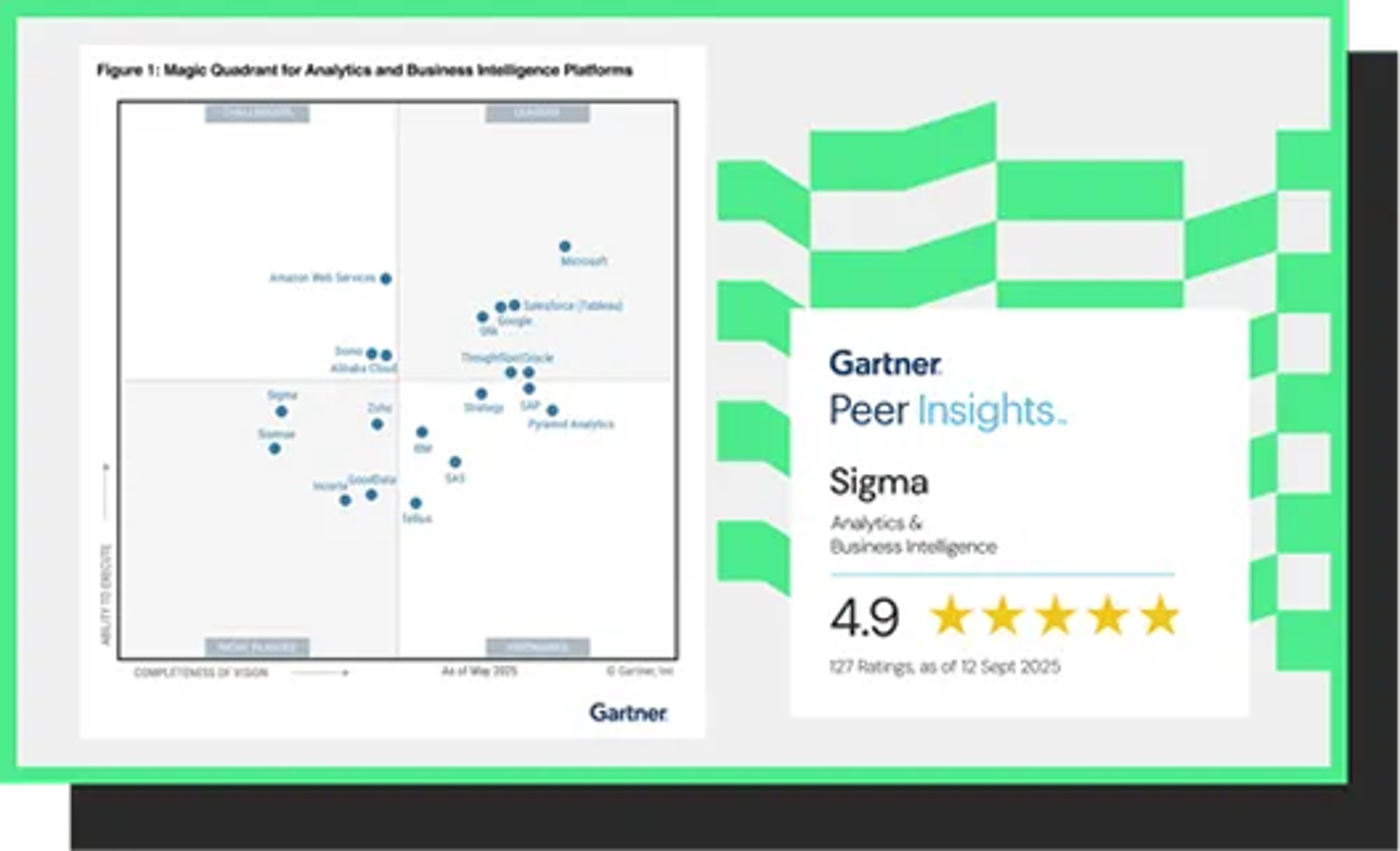
The 2025 Gartner® Magic Quadrant™ for Analytics & Business Intelligence
Read about Sigma's first-time recognition in this report.
Don't take it from us, take it from our customers

“The best and possibly last BI tool you will ever need”
Darlina J.
Business Intelligence Manager Enterprise
Top teams choose Sigma.
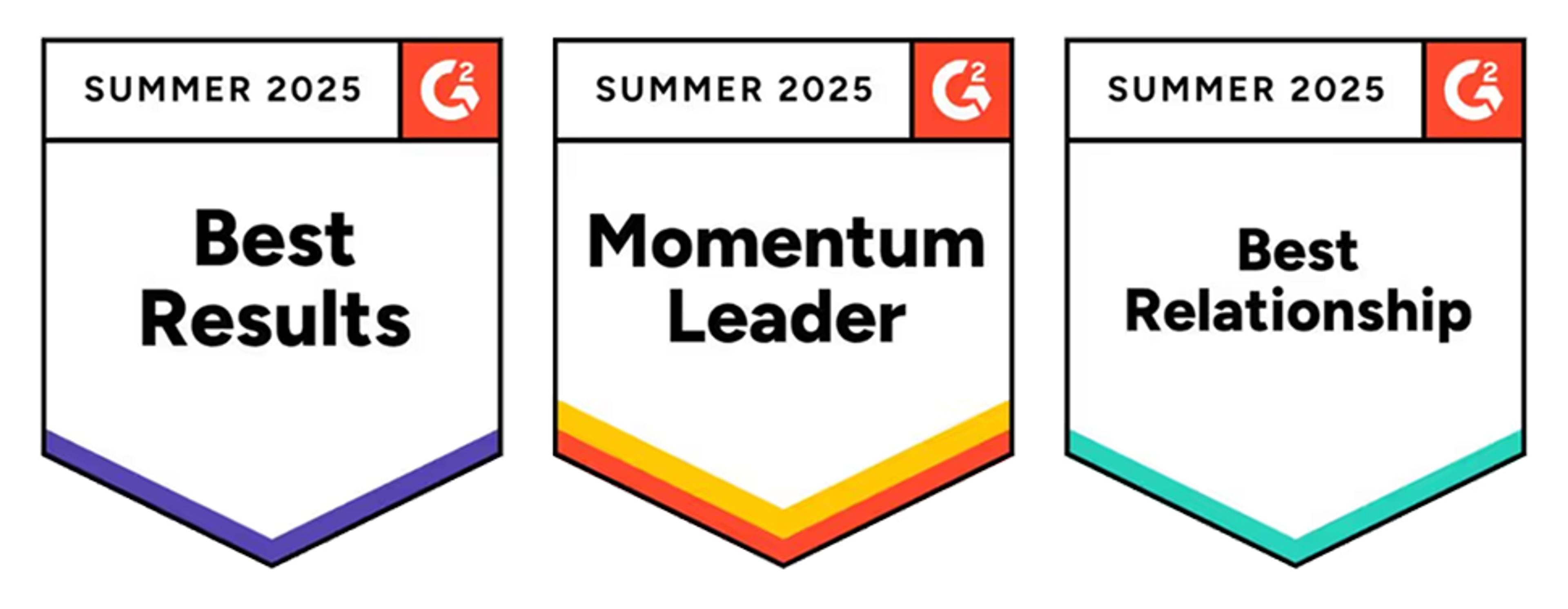
See for yourself. Sigma is a G1 crowd favourite, backed by countless reviews.
Additional resources
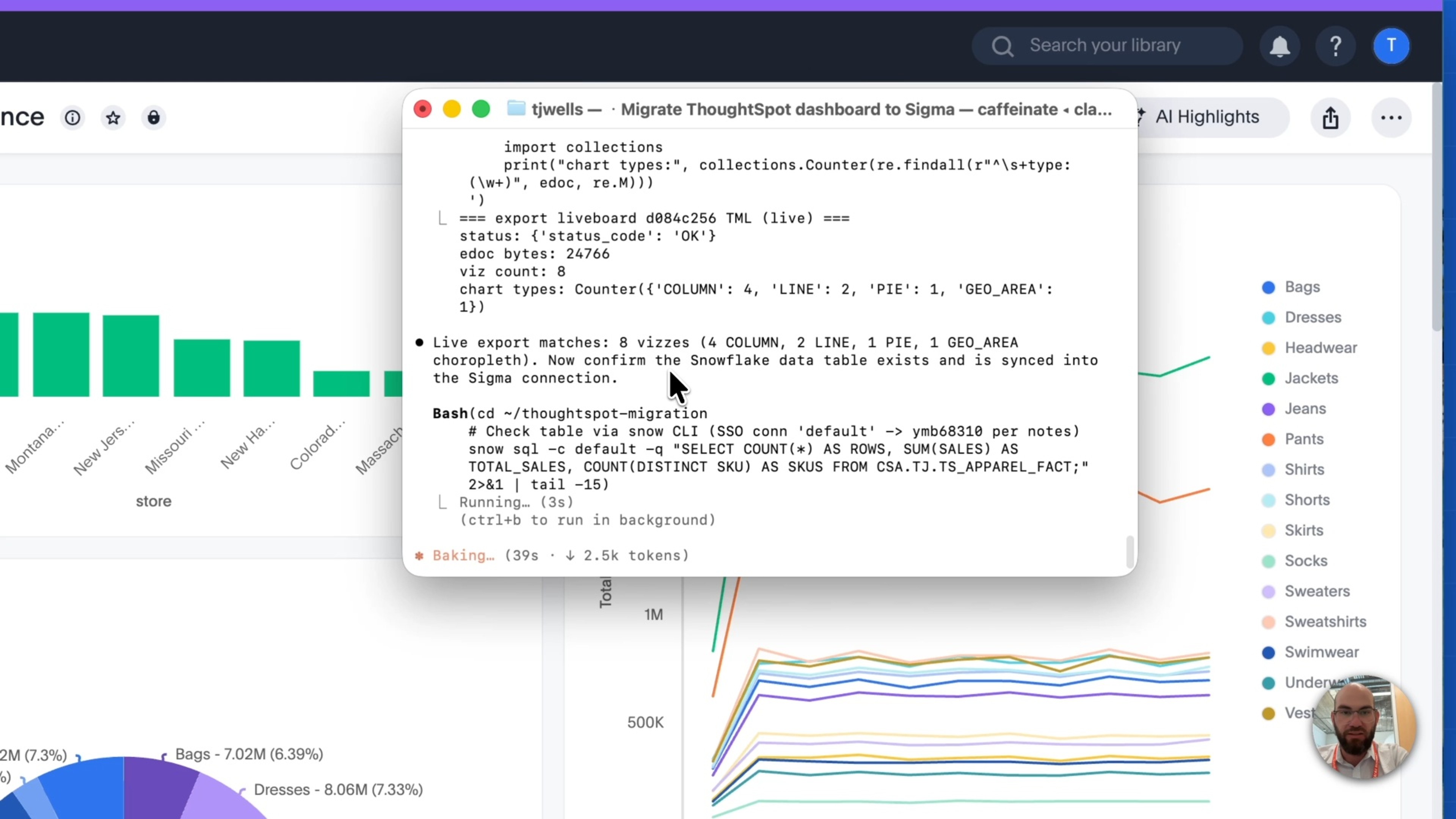
Migrate from ThoughtSpot to Sigma
How Companies Evaluate Sigma and ThoughtSpot
Read about the limitations of Thoughtspot and how Sigma can help you answer your business questions with live data.
Why Sigma Is The Clear Choice For Embedded Analytics Over ThoughtSpot
Discover how Sigma excels over ThoughtSpot in embedded analytics with its ease of use, customization, integration, and predictable pricing for scalable insights.
Ready to see the difference?
Join thousands of data teams who have transformed how they work with Sigma.